Chapter 1. The problem · Step 1 of 10
The contract isn't the job you priced
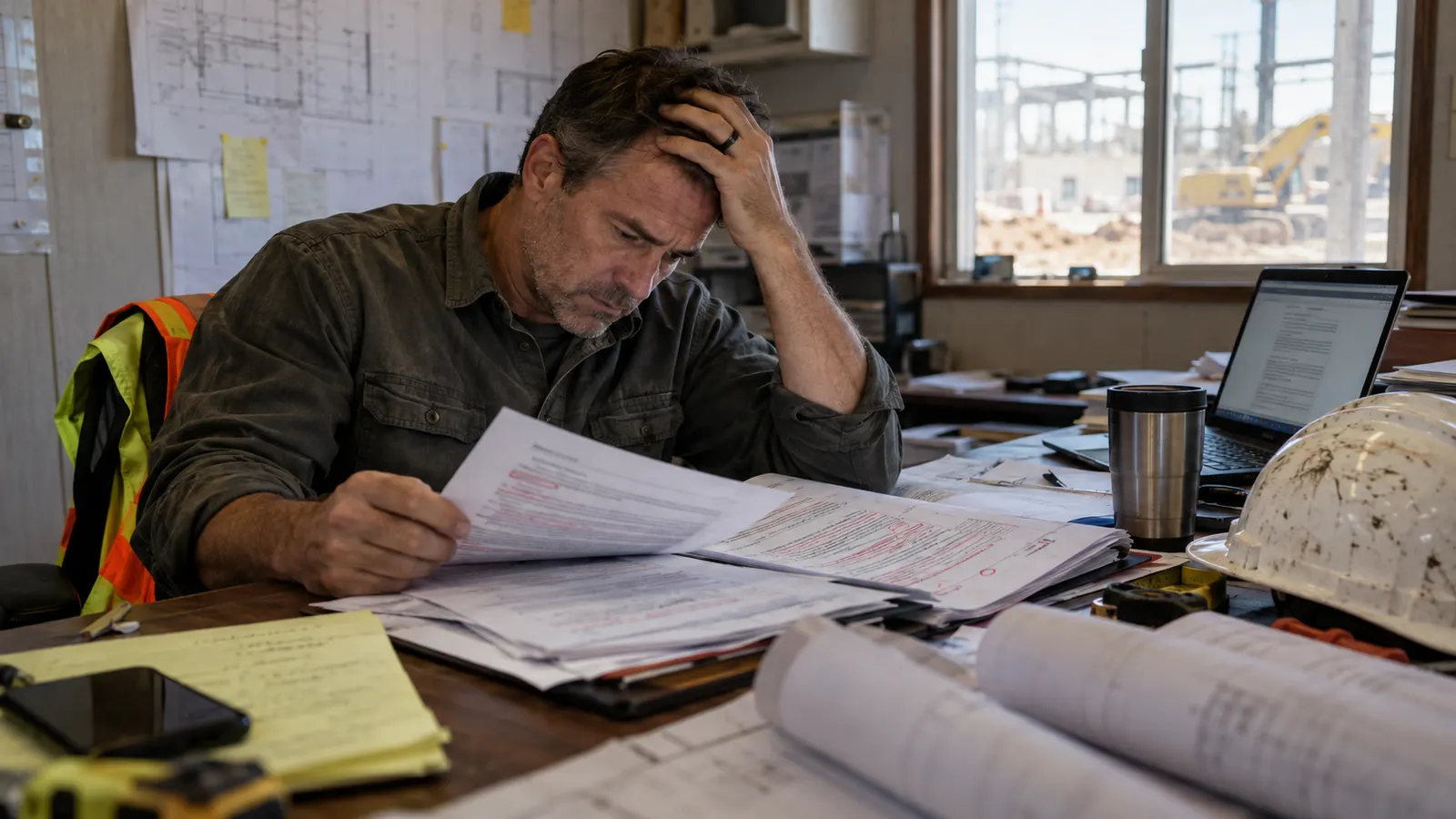
You priced the scope, the schedule and the payment terms. Then the GC sends their subcontract. Their side wrote it, and it quietly changes all three. It usually lands on a project manager who reads it at night, between everything else, with nobody to say what's normal.
Sound familiar?
Five sentences from one subcontract
These are from the fictional subcontract this walkthrough follows: Copperline Flooring, a flooring sub, on a $1,860,000 job for Brookfield Ridge Builders. Each one reads like boilerplate. Each one moves money from your side of the table.
1.1The Subcontract Documents consist of this Agreement, the Prime Contract between Contractor and Owner, the General Conditions, the Project Manual, the Drawings and Specifications, and the Project Schedule, all of which are incorporated by reference as if fully set forth herein. Subcontractor is bound to Contractor to the same extent Contractor is bound to Owner.
What it means for you: You're bound to the prime contract, and to everything the GC owes the owner, whether or not anyone handed it to you.
3.2Payment to Subcontractor is contingent upon Contractor's receipt of payment from Owner. Subcontractor assumes the risk of owner nonpayment.
What it means for you: If the owner doesn't pay the GC, you don't get paid. However good your work was.
3.4Contractor shall retain ten percent (10%) of each progress payment until final completion of the entire Project.
What it means for you: Ten percent of every payment is held until the whole building is finished, not your scope.
4.2Subcontractor shall pay Contractor liquidated damages of $2,000 per day for each day of delay attributable to Subcontractor.
What it means for you: No cap. Enough days of delay and the profit on this job is gone, then you're paying to work.
4.5Subcontractor shall give Contractor written notice of any claim for additional time or compensation within seven (7) days after the event giving rise to the claim. Failure to give such notice shall constitute a waiver of the claim.
What it means for you: Seven days to put a claim in writing. Miss it and a valid claim is waived.
Why it keeps happening
It isn't carelessness. It's the setup.
The other side wrote it
A subcontract is the GC's paper, written to move risk off the GC. That's their job. Somebody has to read it for yours.
There's never time
Bids are due, the job is starting and the GC wants it back signed. A careful read takes hours nobody has that week.
A lawyer on every contract doesn't pencil
Attorney review is billed by the hour and takes days. So most contracts get a quick read and a hope, and the expensive clauses get found on the job.
“What am I missing?”
Every sub who has signed a contract has asked it. You shouldn't lose the profit on a good job to something buried in the contract.
Next: what those five sentences cost, in dollars, on this job.